A new secret is deletion to improve your website ranking in SEO tips
deletion, When it comes to search engine optimization (SEO), most website owners think about producing more—more content, more keywords, more backlinks. This traditional mindset has shaped digital marketing strategies for years. However, in today’s competitive landscape, creating endless amounts of low-quality content does not guarantee higher rankings. Instead, it often harms a website’s authority. The new and surprising truth is that —yes, removing certain pages from your website—can be just as important as creating new ones.
Search engines like Google have evolved to prioritize relevance, quality, and user satisfaction over sheer quantity. This means that if your website is overloaded with outdated, duplicated, or irrelevant pages, it can negatively impact your SEO performance.
The idea may sound counterintuitive at first. After all, why would deleting content help you rank higher? The answer lies in how search engines crawl, index, and evaluate your website. Every page you publish takes up crawl budget and influences how Google perceives your authority.



Why Deletion Matters in Modern SEO
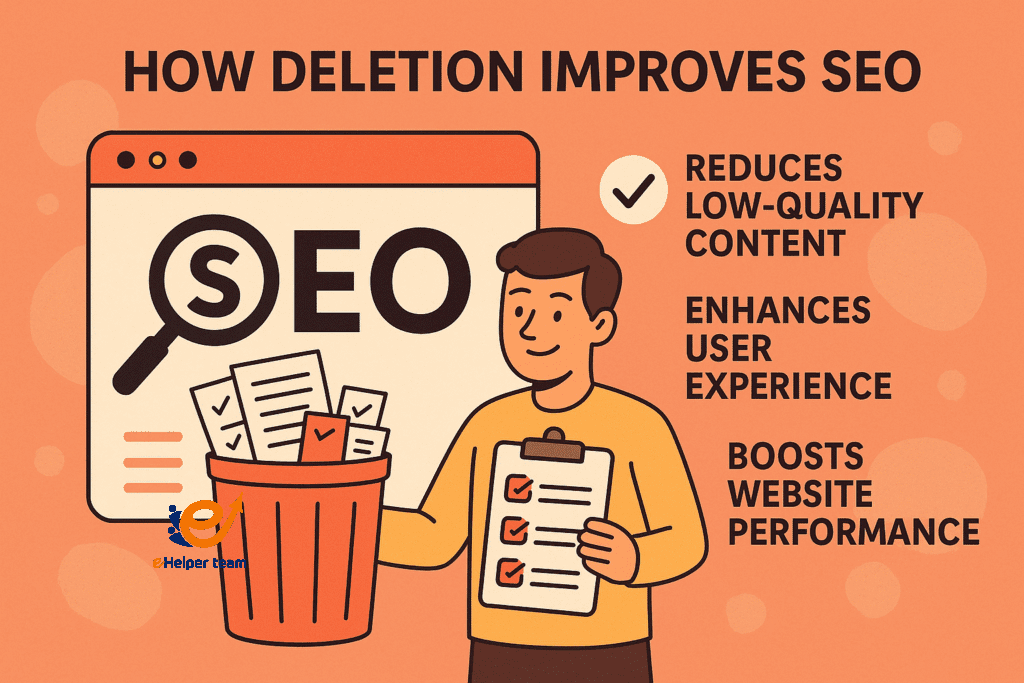
Search engines no longer reward websites based on size alone. In fact, having thousands of weak pages can harm your performance more than help it. plays a crucial role here because it directly improves the overall quality score of your site.
Stronger Authority: When irrelevant pages are removed, the remaining pages gain more visibility.
Better Engagement: Visitors are more likely to stay on your site if it only contains useful information.
Improved Rankings: Google favors websites that offer clarity, not clutter.
A website packed with outdated blogs, duplicate posts, or expired offers signals neglect. On the other hand, a site that practices smart deletion shows that it values accuracy and relevance.
For more context, you can explore The Importance of SEO Optimization which highlights why modern SEO is about more than just adding content—it’s about maintaining quality.
How Deletion Improves Crawl Efficiency
Googlebot doesn’t have infinite time to crawl every website. If your site contains thousands of unnecessary pages, the crawler spends valuable resources on those instead of indexing your best content.
Strategic deletion helps by:
Freeing Crawl Budget: Search engines focus on your strongest pages.
Removing Duplicates: Deleted pages stop competing with more important ones.
Boosting Visibility: High-value content gets indexed faster.
For example, imagine a site with 5,000 blog posts, but only 500 bring traffic. Deleting the weak 4,500 improves crawl efficiency dramatically. Within months, keyword rankings rise, and organic visibility increases.
For more about content worth keeping, read How to Create Evergreen Content. This shows why some content lasts forever, while others require deletion.
When to Use Deletion vs. Updating Content
Not every weak page should be deleted. Some can be updated and saved. Here’s how to decide:
Delete If:
No traffic or backlinks for 12+ months.
Topic is irrelevant today.
Page duplicates other content.
Content covers expired events or products.
Update If:
The page has some traffic.
It has valuable backlinks.
The topic is still relevant but outdated.
Smart SEOs balance updating and deletion. Updating preserves value where possible, while deletion removes what no longer contributes.
The Risks of Deletion and How to Avoid Them
If handled carelessly, deletion can damage rankings. But the risks are easy to manage if you follow best practices:
Don’t delete without redirects. Always set up 301 redirects to a relevant page.
Don’t mass-delete at once. Remove content gradually to avoid shocking Google’s algorithm.
Don’t delete pages with strong backlinks. Merge them into stronger pages instead.
By avoiding these mistakes, deletion becomes a growth strategy, not a liability.
Real-Life Case Studies of Deletion Success
HubSpot pruned 3,000 underperforming posts and saw an 18% traffic increase in six months.
QuickBooks deleted duplicate help pages, improving top-10 rankings by 22%.
A small eCommerce brand removed outdated product pages, cutting crawl waste and boosting conversions by 30%.
These examples show that deletion works across industries, from blogs to eCommerce.
Step-by-Step Guide to Implement Deletion Strategy
Audit Your Content – Use tools like Google Search Console or SEMrush.
Classify Pages – Decide to delete, update, or merge.
Redirect Deleted URLs – Always set 301 redirects.
Update Your Sitemap – Remove deleted URLs.
Monitor Results – Track ranking changes in 30–90 days.
With a regular audit cycle, deletion becomes a natural part of maintaining SEO authority.
Impact of Deletion on User Experience
SEO isn’t just about pleasing algorithms—it’s equally about meeting user expectations. When visitors land on a site cluttered with irrelevant or outdated information, their experience is frustrating. High bounce rates, short session durations, and low trust usually follow. Strategic solves these problems by creating a streamlined, trustworthy experience.
Consider two scenarios:
Before Deletion: A blog has hundreds of irrelevant posts from 2010, expired promotions, and dozens of duplicate articles. Users quickly lose interest and leave.
After Deletion: The same blog deletes low-value content and keeps only relevant, updated resources. Navigation is smoother, trust increases, and users spend more time on the site.
This difference isn’t just cosmetic. User behavior is a powerful SEO signal. Longer time on site, lower bounce rates, and more page visits per session all tell Google your content is worth ranking higher.
For businesses, the effect is even stronger:
eCommerce websites that delete expired product pages and redirect visitors to active categories often see conversion rates rise.
Service websites that remove irrelevant or outdated case studies gain credibility, leading to more leads.
In short, deletion improves the way visitors interact with your brand, and this directly fuels better SEO performance.
Future of Deletion in SEO Strategies
As Google continues to refine its algorith, is expected to become a core SEO strategy. The shift toward quality over quantity means that pruning weak content will matter as much as publishing new content.
Key Trends Shaping the Future
E-E-A-T Standards: Google emphasizes Experience, Expertise, Authority, and Trust. Weak or irrelevant pages will undermine these signals.
AI-Powered Content Audits: New tools are emerging that automatically identify underperforming pages for deletion, updates, or merging.
Voice & Semantic Search: Users expect concise, precise answers. Too much clutter makes it harder for search engines to deliver results quickly.
Forward-thinking SEO experts are already integrating deletion into quarterly audits. Instead of treating it as a rare clean-up project, they make it an ongoing process. This ensures their websites stay lean, authoritative, and competitive in an increasingly crowded digital world.
The message is clear: the future of SEO won’t be about producing the most—it will be about keeping only the best.
FAQs About Deletion in SEO
1. Does deletion hurt SEO rankings?
Not if managed properly with redirects.
2. How often should I audit for deletion?
Every 6–12 months.
3. Should I delete or noindex old content?
Delete if it’s useless, noindex if you need to keep it accessible.
4. Can deletion improve site speed?
Yes, fewer pages mean faster performance.
5. Is deletion relevant for small sites?
Yes, even small blogs benefit from pruning.
6. How do I decide if a page is worth keeping?
Check traffic, backlinks, and relevance. If none apply, deletion is the best choice.
Conclusion
SEO success in 2025 is not just about creation—it’s about curation. By practicing deletion, you remove weak links, free up crawl budget, and highlight your strongest content. Think of it as spring cleaning for your website. Less clutter, more authority, and higher rankings.
Dive deeper into the fundamentals with: The Importance of SEO Optimization.